When three or more vehicles collide, figuring out who’s to blame feels impossible. In Florida, fault in a multi-vehicle accident is usually shared, with each responsible party paying only its percentage of your damages. Our Florida car accident lawyers can help you hold every at-fault party fully accountable.
Who Can Be Liable in a Florida Multi-Vehicle Accident?
In most multi-vehicle crashes, more than one party shares the blame. Florida law divides liability, or legal responsibility for your losses, among everyone whose negligence contributed to the collision. Negligence simply means failing to act with reasonable care, such as tailgating, speeding in heavy fog, or texting behind the wheel.
Each liable party pays only its own share of your damages. If one driver is 60% at fault and another is 40%, each pays that percentage.
Liability isn’t limited to drivers, either. Vehicle owners, trucking companies, and even government agencies responsible for road safety may share fault.
Our attorneys know how to determine liability when several drivers point fingers at each other. After all, we’ve been doing this for over five decades. We dig into the evidence, identify every responsible party, and build a claim designed to recover the full compensation you deserve.
What If I Contributed to the Accident?
In a multi-vehicle crash, insurers often follow the same strategy: shift as much blame as possible onto you. That’s because under Florida’s modified comparative negligence rule (Fla. Stat. § 768.81), the percentage of fault assigned to you can shrink your compensation or wipe it out entirely.
Here’s how it works:
- Your total damages are reduced by your share of fault. If your final damage award totals $100,000 and you’re found 20% responsible, you can recover $80,000.
Taking this example one step further:
- Your total damage award is $100,000. The investigation finds you 55% responsible. Because you are over 50% at fault, you recover nothing.
In a pileup, those percentages are spread across every driver and party involved, including you. That gives each insurer a reason to inflate your share and reduce its own.
We counter these tactics with evidence, and we make sure you understand every step along the way. Educating Floridians is part of who we are. That’s why Meldon Law’s attorneys write consumer guides and answer legal questions each week on Law Talk Live.
Common Multi-Vehicle Crash Scenarios and How Fault Is Determined
No two pileups unfold the same way. The order of each impact, the conditions on the road, and every driver’s choices in the seconds beforehand all shape who shares responsibility. Since opening our doors, our firm has helped injured Floridians sort through crashes like these.
Chain-Reaction Rear-End Collisions
People typically assume that the following driver is at fault in a rear-end crash. However, in a chain reaction, a driver who was pushed into the car ahead by the vehicle behind them didn’t cause that forward impact. Courts also recognize exceptions when the lead driver stopped suddenly and unexpectedly, made an abrupt lane change, or stopped illegally.
Intersection Crashes
When a driver runs a red light and strikes one vehicle, that car may be thrown into others waiting at the light. The driver who ran the light typically bears most of the blame, but a speeding or distracted driver nearby may share fault for making the crash worse.
Low-Visibility Highway Pileups
Sun glare, wildfire smoke, and sudden downpours can reduce visibility to almost nothing on Florida roadways. Drivers have a duty to slow down to a speed that’s safe for the conditions, even if they’re under the posted limit. Several drivers who failed to adjust may each share responsibility for a pileup.
Secondary Collisions
Sometimes a minor crash sets off a series of larger ones as approaching drivers fail to stop in time. The driver who caused the first collision may share fault for the injuries that followed, along with each driver who struck the growing line of vehicles.
Establishing liability in a multi-vehicle accident can be complex. In each of these scenarios, fault comes down to evidence. Our attorneys carefully reconstruct the sequence of events to show who caused each impact and why.
Liable Parties Beyond the Drivers
Some of the most important sources of compensation in a multi-vehicle crash aren’t the drivers themselves. Our firm has recovered hundreds of millions for injured clients, and part of that success comes from looking past the obvious to find every party who contributed to a collision, such as:
- Vehicle owners: Under Florida’s dangerous instrumentality doctrine, a vehicle’s owner can be held responsible when someone they allowed to drive it causes a crash, even if the owner wasn’t in the car.
- Employers and trucking companies: When a commercial driver causes a pileup while on the job, the company they work for may be liable for their negligence, as well as for its own failures in hiring, training, or scheduling.
- Cargo loaders and maintenance contractors: Improperly secured loads and poorly maintained brakes or tires can trigger a chain collision, making the companies responsible for that work potential defendants.
- Government agencies: Poor road design, missing warning signs, or a failure to address known visibility hazards can contribute to a crash. Claims against the government come with special notice requirements and shorter timelines, so acting quickly is critical.
- Vehicle and parts manufacturers: A defective brake system, faulty tire, or malfunctioning safety feature may have caused the crash or made your injuries worse, opening the door to a product liability claim.
We are here for you 24/7
(Consultations are Free)
Insurance in Multi-Car Crashes: Who Pays and in What Order
Understanding who pays and when can seem impossible. We break it down below:
PIP Coverage
Florida is a no-fault state, so your own personal injury protection (PIP) coverage pays first, regardless of who caused the crash. PIP typically covers 80% of your medical bills and 60% of lost wages, up to $10,000, and only if you seek treatment within 14 days.
The Other Drivers
In a serious pileup, $10,000 rarely goes far. That’s when you’ll need to pursue the at-fault parties’ insurers, which can be challenging. Florida doesn’t require drivers to carry bodily injury liability coverage, so some may have little or none. When several injured people claim against the same limited policy, the available money can run out quickly. Moving fast helps protect your share.
Your UM Coverage
If an at-fault driver is uninsured, underinsured, or fled the scene, your uninsured/underinsured motorist (UM/UIM) coverage may help fill the gap.
Both PIP and UM claims typically require a police report.
Throughout this process, adjusters may ask for a recorded statement or press you to accept blame. Let us handle those conversations instead. Meldon Law’s CARES values (Compassion, Accountability, Reliability, Excellence, and a drive for Success) guide how we protect you at every step, from coordinating PIP benefits to negotiating with every insurer involved. We’ll make sure no source of coverage is overlooked so you can focus on your recovery.
How Our Attorneys Investigate and Prove Fault in a Multi-Vehicle Crash
Evidence in a multi-vehicle crash disappears fast. Footage gets deleted, vehicles get repaired, and memories fade. That’s why we start building your case right away.
Our investigation may include:
- Obtaining crash reports from the Florida Highway Patrol, county sheriffs, or local police
- Securing dashcam, traffic camera, and nearby business surveillance footage
- Downloading black box data from vehicles, especially commercial trucks
- Working with accident reconstruction specialists to map the sequence of impacts
- Interviewing witnesses while details are still fresh
- Reviewing medical records to connect each impact to your injuries
Every piece of evidence we gather has one goal: a clear picture of who caused your crash, so the right parties pay for your losses.
We aren’t a case mill. We limit the number of cases we take so every client gets the personal attention they deserve. You’ll get prompt updates, clear answers, and a team that returns your calls. Limiting our caseload doesn’t limit our experience, and it doesn’t mean we only take catastrophic cases. If you’re unsure whether your injuries meet a specific threshold, call us anyway.
Our team is bilingual, so we can guide you through the process in the language you’re most comfortable with.
Talk to a Florida Multi-Vehicle Accident Lawyer Today
Untangling fault after a multi-vehicle crash shouldn’t fall on your shoulders. And when you work with us, it won’t. Meldon Law has offices in Gainesville, Ocala, Lake City, Fort Lauderdale, Aventura, and Williston, so you can get help where you want it. Consultations are free, and you pay nothing upfront. When insurers push back, we won’t back down. Call today to get started.
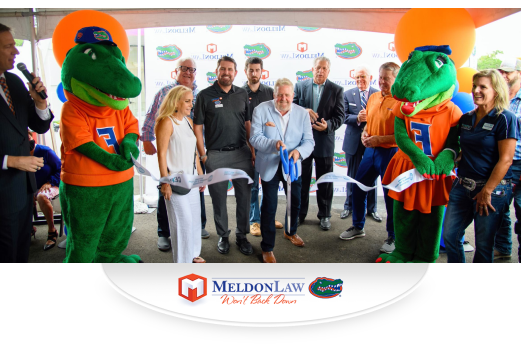
Trusted by the Florida Gators. And Floridians everywhere.