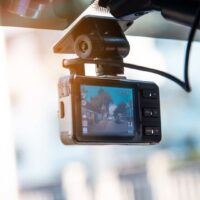
After a crash, the other driver’s story may not match yours. Dashcam footage can settle that dispute. It offers an objective, time-stamped record of what happened, often proving who caused your accident. Our Florida car accident lawyers know how to use video footage to prove negligence and fight for the compensation you deserve.
Dashcam Footage Can Be the Key to Proving What Happened
The moments after a collision are often chaotic. You may be hurt, shaken, and unsure of exactly what happened. Meanwhile, the other driver may already be telling their insurer a version of events that places the blame on you.
Dashcam footage can cut through that confusion. Unlike memories, which fade and shift over time, video captures details as they unfold, such as:
- A driver running a red light or stop sign
- An unsafe lane change or sudden stop
- Weather, lighting, and road conditions at the time of the crash
This evidence carries real weight in Florida. Under our state’s comparative negligence law, you cannot recover compensation if you are found more than 50% at fault for your accident. Even a smaller share of blame reduces what you receive. Clear video can help show the other driver was responsible, protecting your right to full compensation.
How Our Lawyers Use Dashcam Footage to Prove Negligence
Dashcam footage is a powerful starting point, but video alone rarely tells the whole story. Turning that footage into evidence that holds up with insurers and in court takes skill, experience, and knowledge, which are the most important things you can have on your side. Our attorneys bring all three, using video to build clear proof of negligence that shows another driver acted carelessly and caused your injuries.
When you bring your footage to our firm, we will:
- Review the video frame by frame to pinpoint speed, timing, traffic signals, and the moment of impact
- Compare the footage with the police report, photos, and witness statements
- Pair the video with vehicle data and medical records to connect the crash to your injuries
- Work with accident reconstruction specialists when needed
- Use the footage to push back against claims that you were partly at fault
This careful approach has helped us secure meaningful results for injured Floridians, including car accident recoveries of $4,200,000, $995,000, and $500,000. Every case is different, and past results do not guarantee a similar outcome. Still, we hope these results show what is possible when the right team is fighting for you.
Can Your Own Dashcam Footage Hurt Your Case?
Dashcam footage records everything, including your own driving. While video often supports your account of the crash, it may also capture moments the insurance company will try to use against you, such as:
- Driving a few miles over the speed limit
- Rolling through a stop sign
- Glancing at your phone or GPS
- Following another vehicle too closely
- Swerving
Insurers look for any detail that lets them shift part of the blame onto you, since even a small share of fault can reduce your compensation. However, footage that shows a minor mistake on your part does not automatically end your claim. In many cases, the other driver’s actions still caused the crash, and our attorneys know how to put your conduct in context.
What you should never do is delete, edit, or hide footage you are worried about. Destroying evidence can damage your credibility and seriously weaken your case. Instead, let our team review the full recording before you share it with anyone. We can then build a strategy around the complete picture and protect your right to fair compensation.
Is Dashcam Footage Admissible in Florida Court?
In most cases, yes. Florida courts generally allow dashcam footage as evidence, but it must meet certain standards first. The video must be relevant to your case, authentic, and legally obtained. In other words, it must clearly relate to the crash, show events exactly as they happened, and be recorded in a way that follows Florida law.
Authenticity is often where the other side pushes back. Defense attorneys may argue that footage was edited, trimmed, or altered in some way. That is why the original file, along with its timestamp and other built-in data, is so valuable. Our attorneys know how to preserve that information and present footage in a way that holds up to scrutiny.
Audio can raise a separate issue. Florida is an all-party consent state, meaning that under Florida Statutes § 934.03, everyone in a private conversation must agree before it is recorded. If your dashcam captured passengers talking without their consent, that audio could be challenged or excluded. Video alone generally does not raise this concern, and in many cases, we can still use the footage even if the audio is removed.
We are here for you 24/7
(Consultations are Free)
What to Do With Your Dashcam Footage After a Crash
Most dashcams record on a continuous loop, automatically replacing older files with new ones. If you keep driving without saving your footage, the recording of your crash could be gone within hours. Taking a few simple steps right away can protect this valuable evidence:
- Save the clip immediately: Use your dashcam’s lock or save feature, or remove the memory card so the footage cannot be overwritten.
- Make backup copies: Store copies on your computer or a cloud account, but keep the original memory card or device untouched.
- Leave the footage as is: Avoid trimming, adding filters, or posting the video on social media, all of which can raise questions about its authenticity.
- Write down key details: Note the date, time, and location of the crash while they are still fresh in your mind.
- Talk to an attorney before sharing it: Insurers may request your footage early, and our team can review it first.
Acting quickly also protects your legal rights. Under Florida Statutes § 95.11, you generally have two years from the date of your crash to file a personal injury lawsuit. The sooner you reach out, the more time we have to preserve evidence and build your case.
Other Evidence That Strengthens Your Dashcam Footage
Even the clearest video works best alongside other proof. Insurers and juries are more likely to trust footage when additional evidence confirms what it shows. Our team may gather:
- Police reports and 911 call records
- Photos of the scene, vehicles, and your injuries
- Statements from eyewitnesses
- Vehicle event data recorder (black box) information
- Cell phone records showing distracted driving
- Medical records linking the crash to your injuries
Together, this evidence builds a complete, consistent story that is much harder for the insurance company to dispute.
Talk to Our Florida Car Accident Lawyers About Your Footage
Whether you have clear dashcam footage, video you are worried about, or no footage at all, we want to hear your story. At Meldon Law, helping injured Floridians isn’t just our job; it’s our calling. Our team offers free consultations, works on contingency, and can help you in the language you prefer. Call us today for answers, even if you’re unsure you have a case.